
Header bracket quality
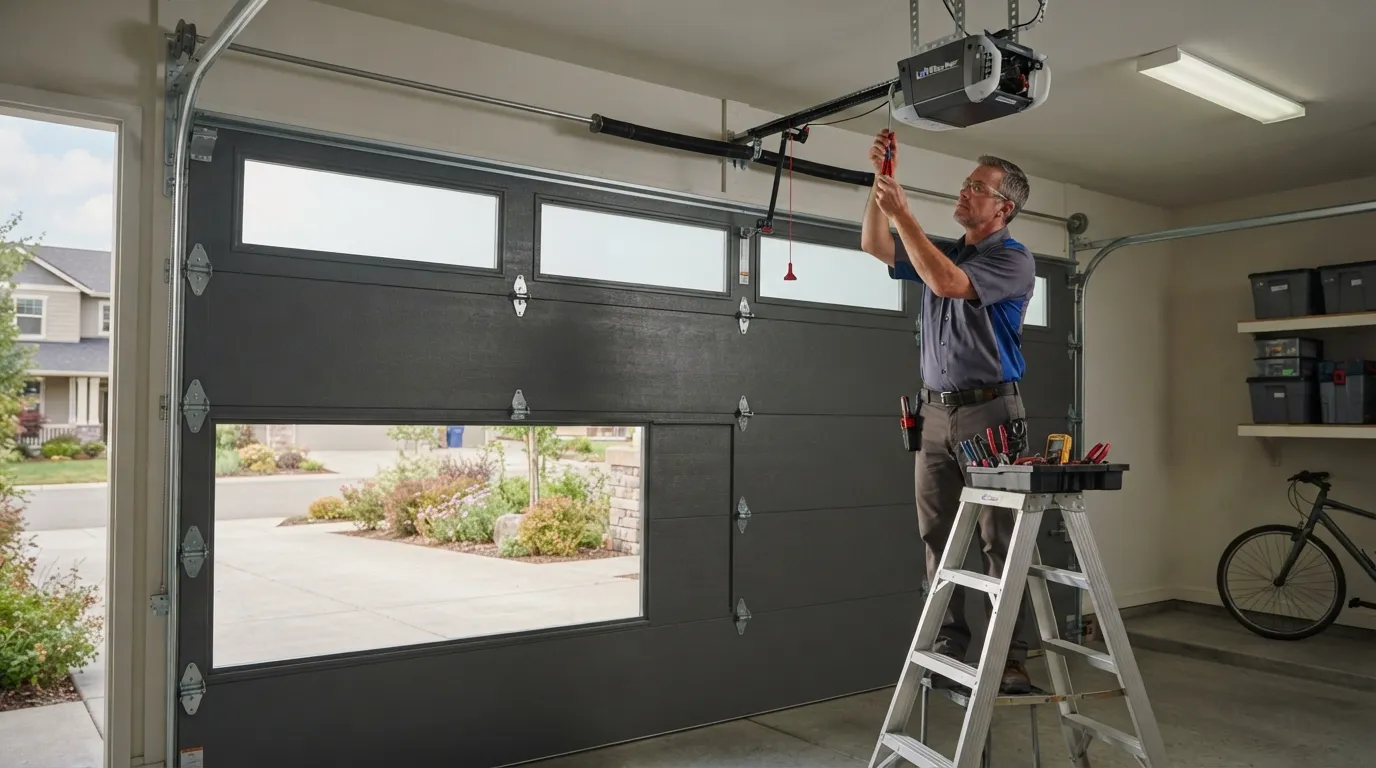
Bolt a new opener to that bracket without checking it first and you'll get a rattle that gets worse every month, then a bracket pull-out that drops tension on the whole system. The other spot is the wiring.
Secaucus, Jersey City
Secaucus homes date mostly to 1980, a generation newer than the rest of the service area, and that changes what opener install looks like here. We cover it from Jersey City, five miles out.
Local causes
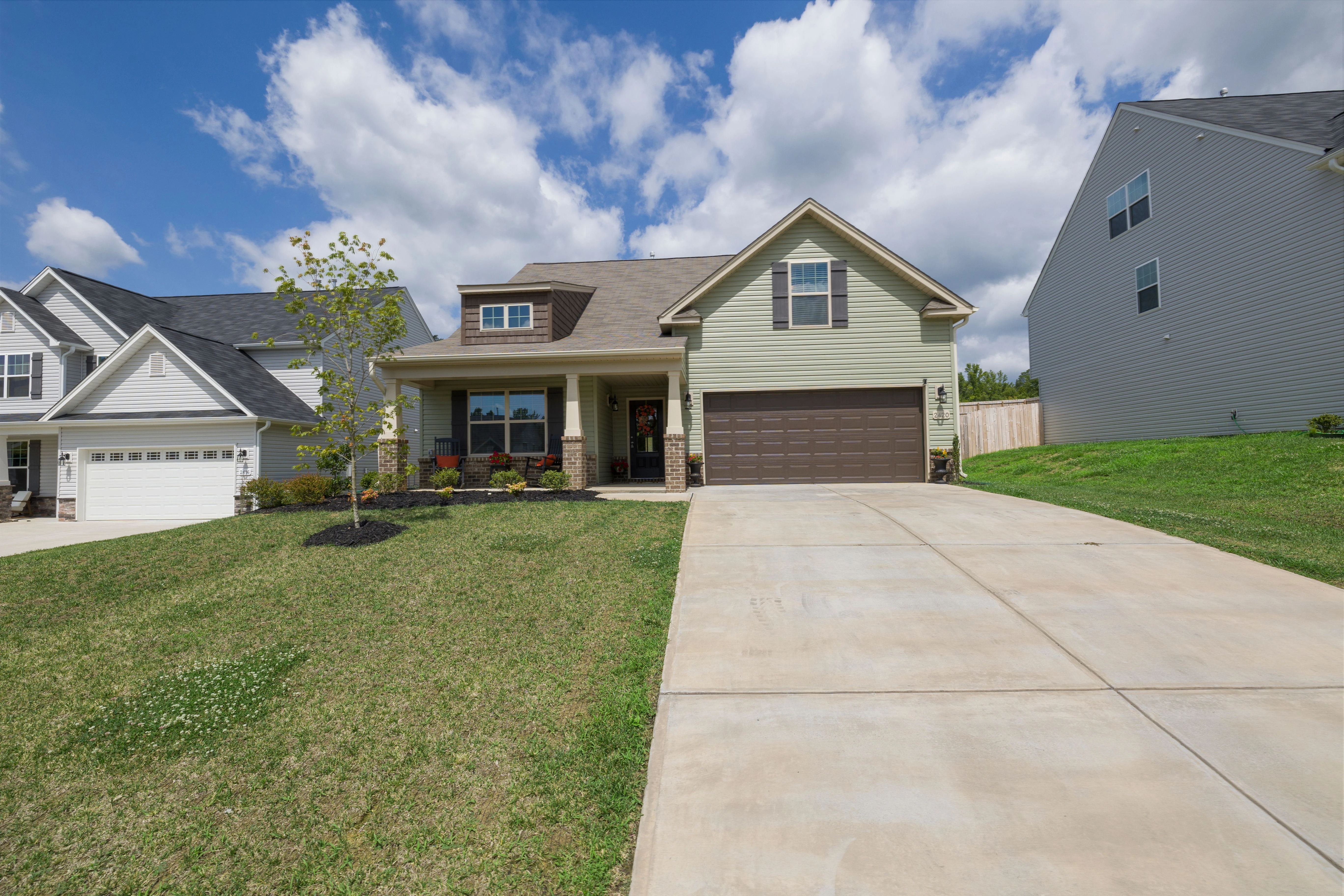
Secaucus is younger than most of the towns we cover. The median house here went up around 1980, about twenty years after the median for the wider service area, where most stock traces back to the late 1950s. That gap matters for openers. A house built in 1980 almost never has its original garage door opener still bolted to the ceiling - motors from that era were rated for a lot fewer duty cycles than what's sold today - but a good number of these houses still have a *second-generation* replacement from the 80s or 90s: a chain-drive unit with a single-button remote, no keypad, no rolling code, no battery backup. It still runs. It just doesn't talk to a phone, doesn't reverse reliably on an obstruction the way current units do, and parts for it stopped shipping a long time ago. With 8,525 households in town, that's a lot of garages carrying hardware nobody makes anymore. When it finally quits, the fix isn't a part swap. It's a new unit.
Winters here fall in the same cold-climate band as the rest of the region, and cold makes weak chain-drive motors and old lubricant work harder before they fail - one more reason the failures cluster in the same handful of unit types.
Watch-outs
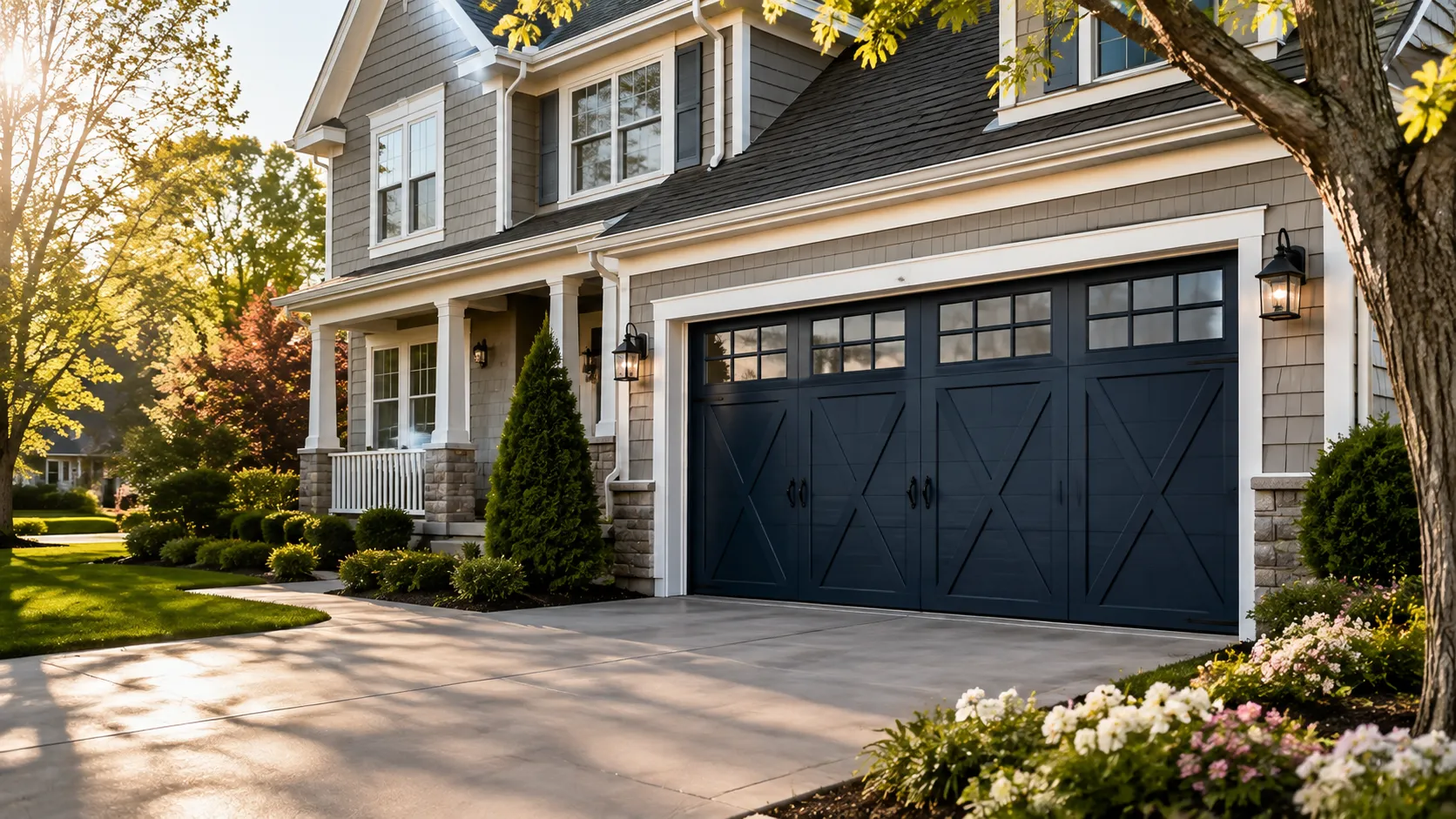
The trouble spot on a 1980s Secaucus house is almost always the bracket, not the opener. Builders in this era mounted the header bracket into whatever framing was behind the drywall, and forty-plus years of a chain yanking on it loosens the lag screws or splits the wood.
Bolt a new opener to that bracket without checking it first and you'll get a rattle that gets worse every month, then a bracket pull-out that drops tension on the whole system. The other spot is the wiring.
Houses from this build year often ran a doorbell-gauge wire to a wall button with no safety sensor circuit at all - sensors weren't standard equipment yet when these houses were built. Retrofitting sensors means running new low-voltage wire across the header, which takes longer than the swap itself if the old wire was stapled into the framing.
Household income in Secaucus runs well above the $118,835 median for the service area, and we see that reflected in what gets asked for: belt-drive units, battery backup for the outages that come with severe winter weather, and app control. All doable. What we won't do is bolt a heavy-duty belt-drive motor to a bracket that's already failing - that's a callback waiting to happen, and we'd rather fix the bracket first.
Job timing
We run this job out of Jersey City, and Secaucus sits about five miles out, so travel time is built into how we schedule the day rather than something that changes call to call.
Once we're on site, a straight opener swap on a bracket that's still sound is a same-visit job. Add a bracket repair or a low-voltage wiring retrofit for sensors and it runs longer, since that's carpentry and wiring on top of the mechanical swap. We won't guess at which one your house needs before we're standing under the header.
A house built in the same year on the same block can have a solid bracket or a rotted one depending on what happened to it in forty-plus years of humidity and use, and there's no way to know which one yours is without a ladder and a flashlight.
That's the one honest limit here: we can tell you what's common for a 1980-era Secaucus garage, we can't tell you what's under your specific header sight unseen.
On the truck
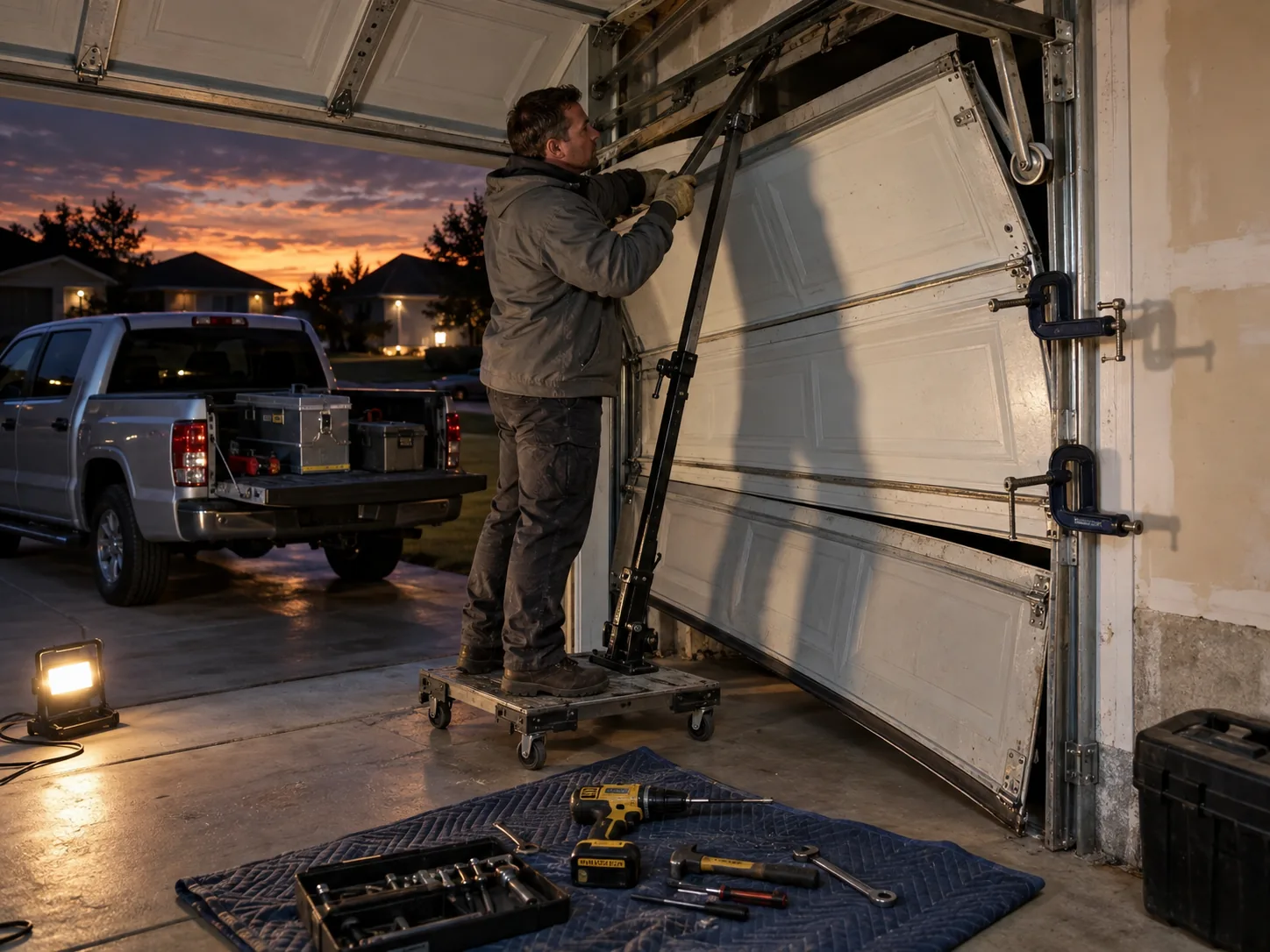
For the openers we actually pull out of Secaucus garages - older chain-drive units and their brackets, hinges, and header hardware - we carry common replacement brackets and standard-gauge low-voltage wire on the truck, since those come up on nearly every retrofit in a house this age. Battery backup units and belt-drive motors are stocked as complete units, not built up from parts, since that's how they're serviced.
What we don't carry is parts for openers older than what's typical for this build year - the handful of houses in town with something from before 1980 that never got upgraded. Those need a part number pulled from the unit itself before we can say what's available, and sometimes the honest answer is that replacement is the only option because the part hasn't been made in decades. We'd rather tell you that on the phone than after we've opened the housing.
Questions
Most Secaucus houses were built around 1980, and the openers in them are usually a generation newer than the house itself - a chain-drive replacement from the 80s or 90s rather than anything original. Those units are past their expected service life and parts for them are largely unavailable.
No. We're based in Jersey City and cover Secaucus from there, about five miles out. There's no local depot or drop-off point in town - everything comes off the truck on the day of the job.
Sometimes. Brackets from this build era can loosen or split after decades of chain tension. We check the bracket before mounting anything new, and if it's not sound, that gets fixed first rather than bolting a new motor to a weak point.
Not by retrofitting the old unit - battery backup is built into the opener itself, so it means installing a new unit rated for it. Given winters here, it's a common request, and we stock backup-capable units as complete units.
Explore more
Ready when you are
Jersey City Garage Door Pros repairs and installs garage doors, springs and openers in Jersey City, NJ and the surrounding area.