Emergency Garage Door Repair for Hoboken Homes in Jersey City

Hoboken, Jersey City

Emergency Garage Door Repair for Hoboken Homes

Emergency garage door repair in Hoboken, NJ, run from our Jersey City shop three miles away. Torsion-spring and cable calls for 1970s-era Hoboken homes.

Serving Jersey City, NJBackground-checked techsHonest, upfront pricingFast local response

Booking

How to Book

Hoboken sits three miles from our Jersey City shop, and that's the run our truck makes the minute you call - there's no separate Hoboken office, just a crew that comes over.

  1. Later median build year

    What's different about booking here is the building stock: Hoboken's median build year runs around 1975, close to two decades newer than the 1958 median across the rest of the territory we cover, where housing generally dates to before 1960. That gap changes what we load on the truck before we leave.

  2. Door type classification

    When you call, tell us the door type - one-piece, sectional, roll-up - whether the opener is chain or belt drive, and the age of the building if you know it. If a spring has already snapped, say which side of the door it let go on.

  3. Spring location clarity

    Because most jobs out this way involve newer torsion-spring hardware rather than the older extension-spring setups common in the pre-1960 pockets of the service area, that one detail helps us bring the right bar and cable stock instead of guessing on the drive over. Booking is the same call-in process used across the territory - no local dispatch, no separate line, just the Jersey City crew making the short trip.

Job timing

Time on the Job

A broken torsion spring on a standard double door is usually a same-visit fix once the truck is on site - the work itself is an hour or so, spring and cable together.

Traffic bound arrival

What we can't promise is a fixed arrival window before we've talked to you, since we're coming from Jersey City and traffic on that three-mile stretch varies by time of day. If the job turns up something the truck doesn't carry - a specific opener logic board, for instance - that part isn't something we keep on hand, and the honest answer is a second trip once it's ordered.

Standard fix prevalence

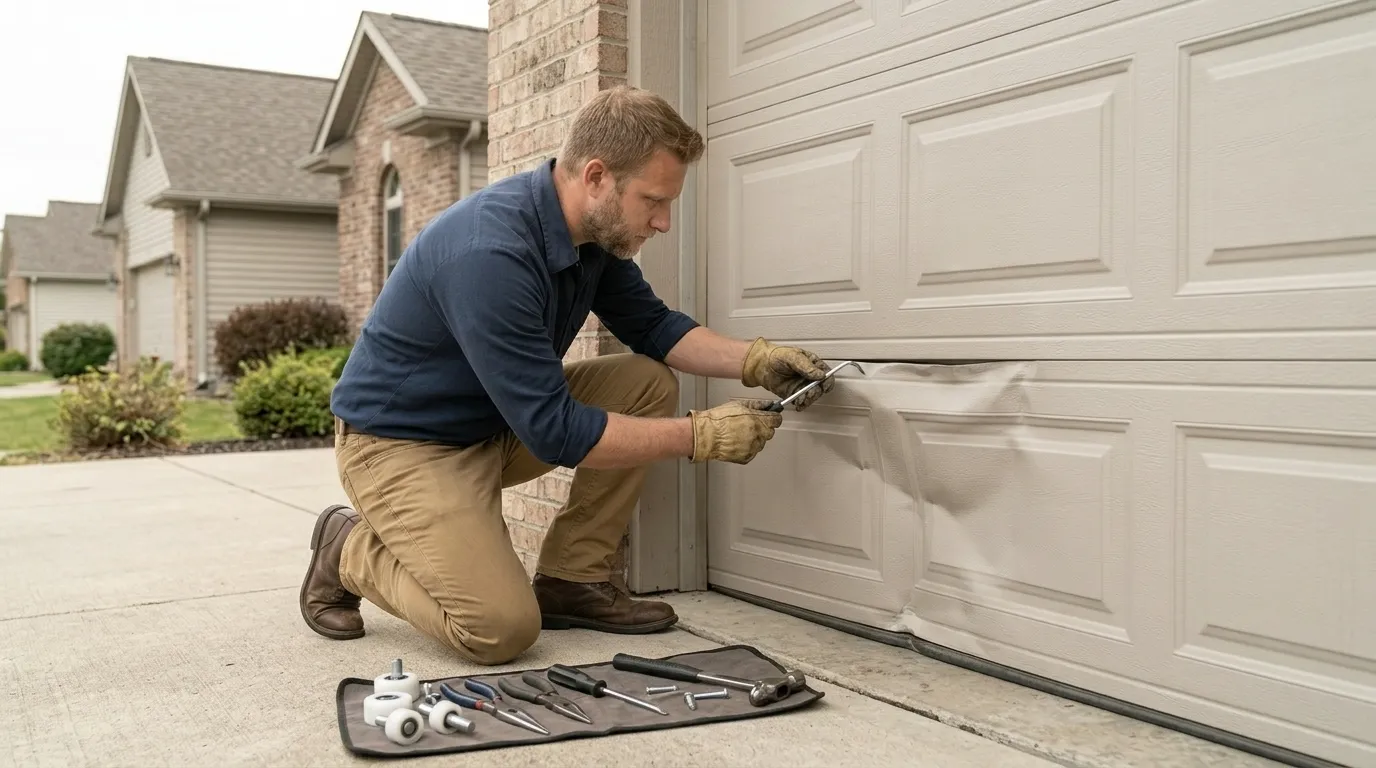
Most emergency calls out this way don't need that: a snapped cable, a bent track section, a jumped roller, or a spring that let go on a garage built during the 1970s wave of construction are straightforward with standard stock.

Commercial grade exception

What takes longer is anything involving a heavier commercial-grade door, which shows up more in older mixed-use buildings than in the newer stock typical of this area. We'd rather tell you upfront that a part needs ordering than pretend every job wraps in one visit.

DIY or pro

Can You Do This Yourself

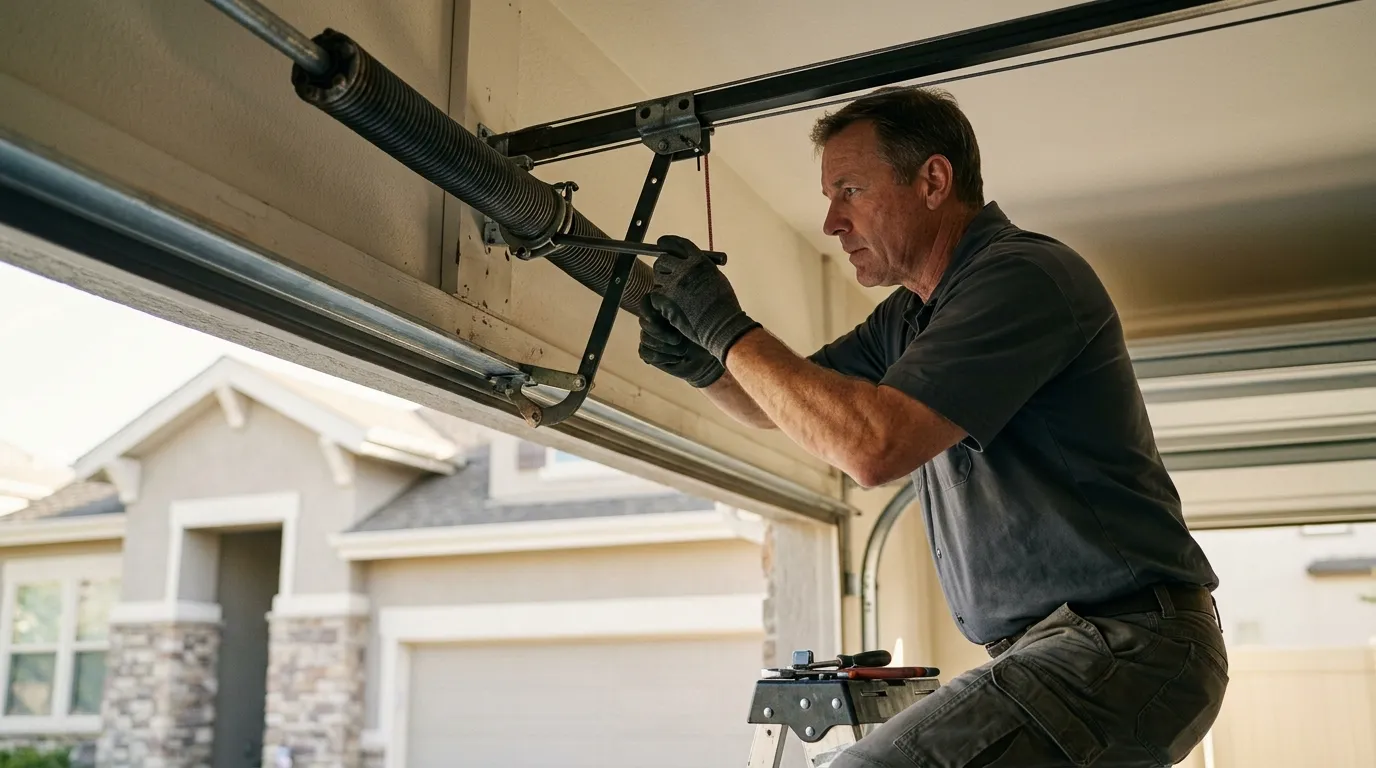
A torsion spring under tension can break a wrist or worse if you don't have the winding bars and the clamp set, and we don't recommend touching one yourself, even on a newer door with lighter hardware.

Safe personal boundaries

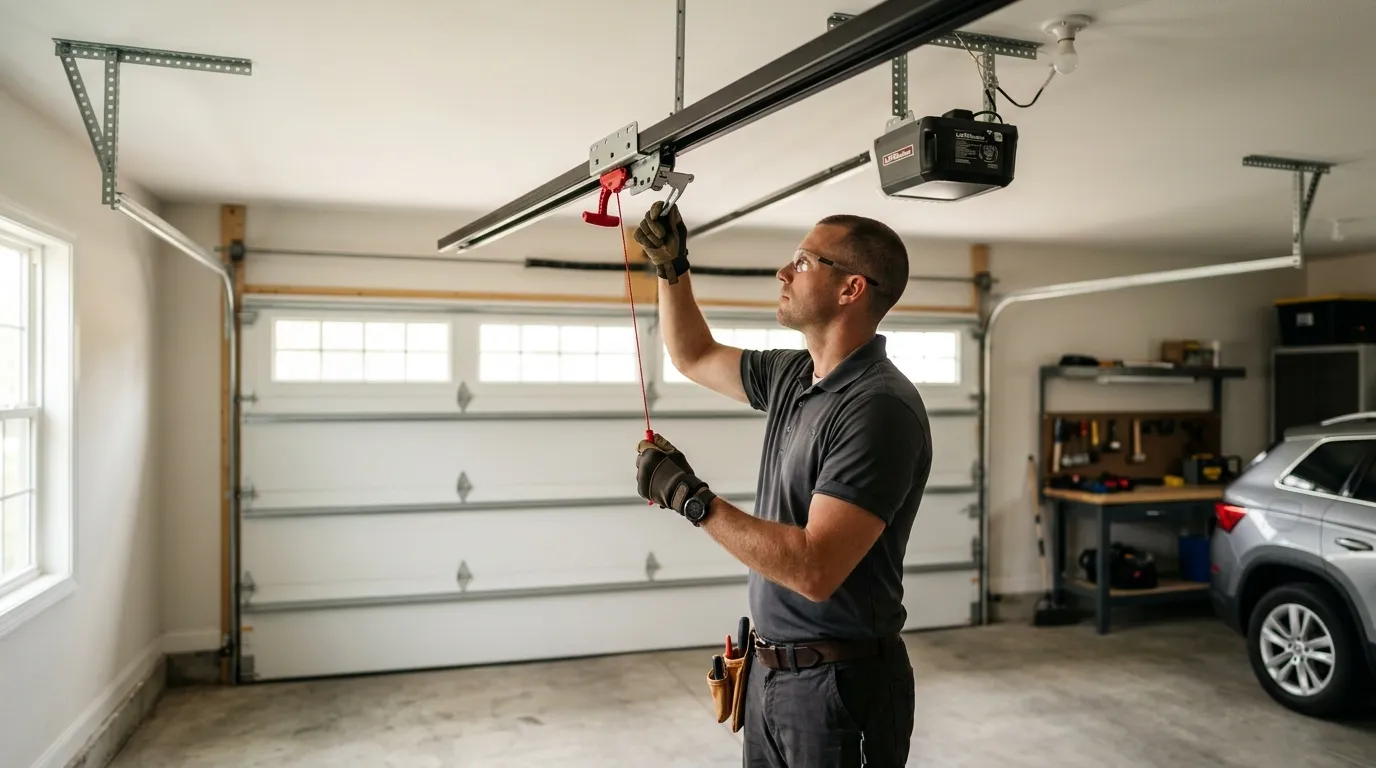
Where a homeowner can safely help: check that the opener's safety sensors aren't blocked, check that the track isn't visibly bent before you force the door, and check the manual release cord if the opener seems dead but the door won't budge by hand either.

Spring force awareness

Beyond that, the honest limit is the spring and the cable - both store enough force to do real damage, and that doesn't change because a house is newer construction.

Hardware era checking

One thing worth knowing before you try anything: doors on buildings from the 1970s-and-later wave typically run torsion springs mounted above the door rather than the side-mounted extension springs on older stock elsewhere in the territory. If you're not sure which you have, that's a reason to call rather than guess, not a reason to wait.

Warning signs

How It Shows Up

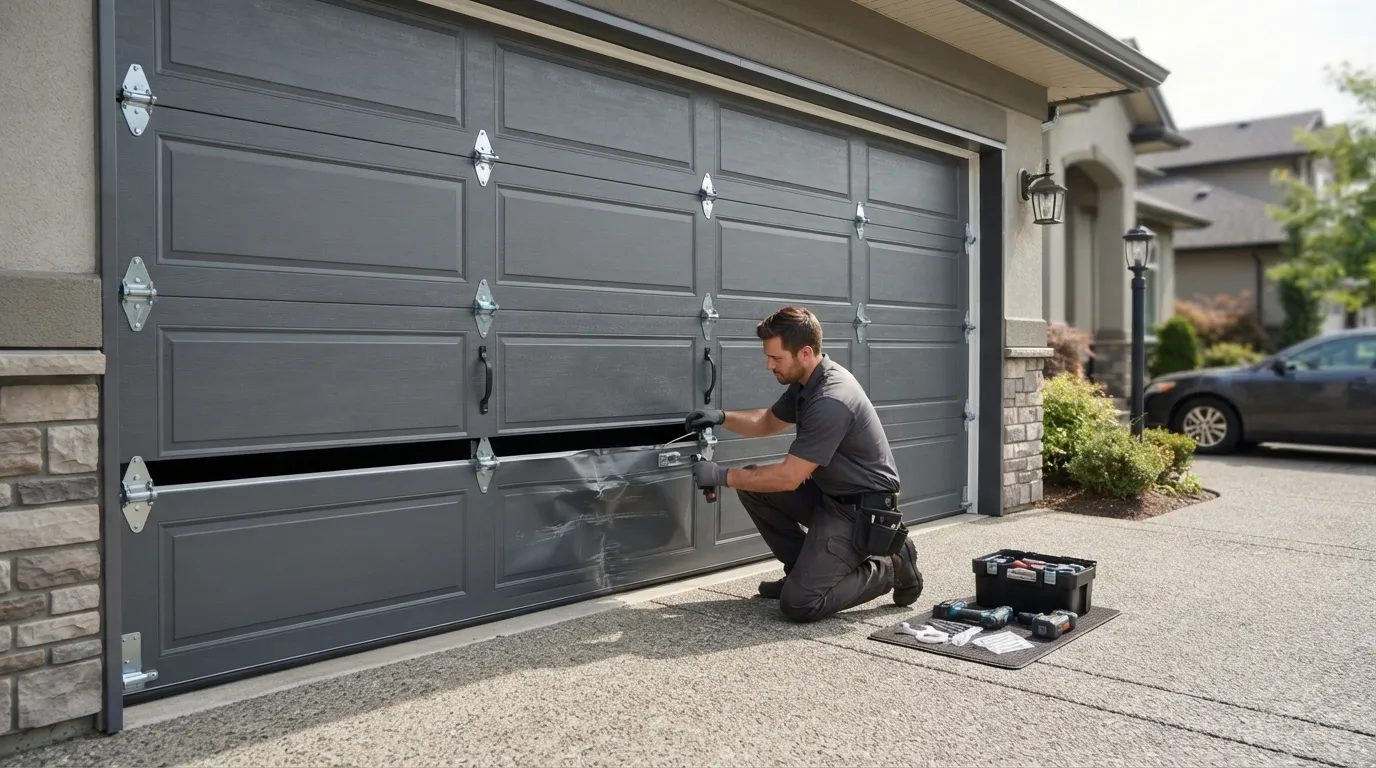
On buildings from Hoboken's typical construction era - 1970s and later - the failure we see most is a torsion spring giving out after years of cycling, usually announced by a loud bang and a door that won't lift past a few inches.

Frayed cable failure

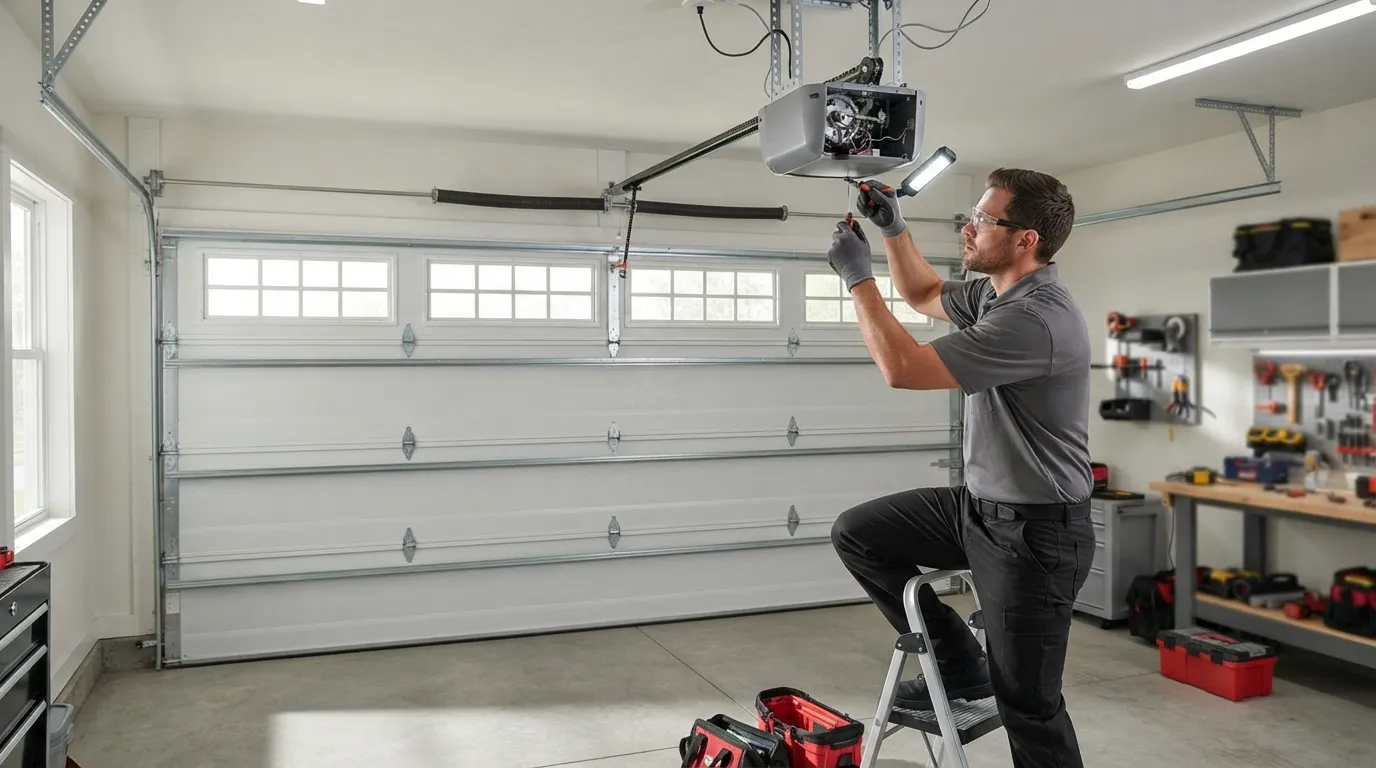
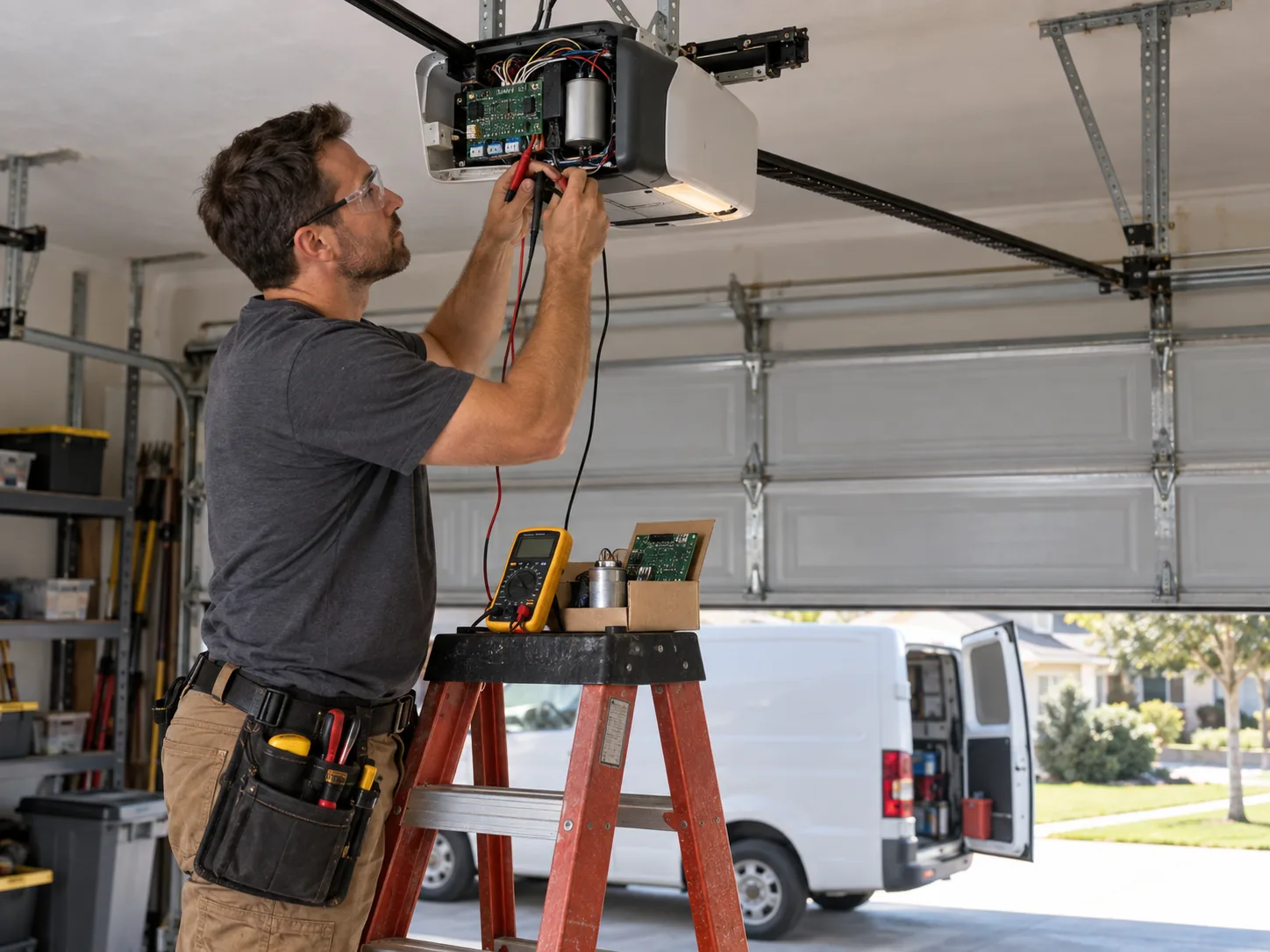
Cables fray at the drum on these same setups, and a frayed cable under load can snap and drop one side of the door hard. Openers on this stock are more likely to be chain or belt units with circuit boards than the older bare mechanical setups you'd find on pre-1960 buildings elsewhere in the service area, so a dead opener here is more often electrical than mechanical.

Roller wear shudder

Rollers wear the same way regardless of build year, so a door that shudders or grinds partway through its travel is usually just old rollers, cheap to replace.

Wood panel era absence

What doesn't show up much on newer stock is the warped, swollen wood panel you get on original one-piece doors from the 1940s and '50s - that's a different-era problem, not one we see as often on a 1975-median building base.

Local causes

Why It Happens Here

This area sits in a climate band the federal data classifies as cold-severe, and that means real freeze-thaw cycling on any metal hardware left outdoors - springs and cables lose tension and fray faster than they would somewhere milder. Combine that with a housing stock centered on 1975 and you get a specific pattern: torsion springs original to construction are now fifty years into a job most manufacturers don't rate that long, so failures cluster in exactly the kind of buildings that make up most of this area. It's a different pressure than what drives calls in the pre-1960 pockets of the wider territory, where the springs have often already been replaced once and the bigger issue is warped original panels. Median household income here runs $176,943, well above the $118,835 median across the rest of the service area, and in practice that shows up as more replacement calls relative to patch-repair calls - owners here are more likely to swap a whole door once the spring goes than have it rewound a second time.

Why It Happens Here

Questions

Common questions

Do you have a branch in Hoboken?

No. Hoboken is covered from our Jersey City shop, about three miles away. There's no separate local office or dispatch line - the same crew that handles Jersey City calls makes the short drive over for Hoboken jobs.

Why did my spring break if the house is only from the 1970s?

Fifty years is a long service life for any torsion spring, original or not. Hoboken's housing stock centers on 1975, which means a lot of original hardware is well past the point most manufacturers rate it for, especially after decades of freeze-thaw cycling in this climate.

Can I replace the spring myself to save time?

We'd rather you didn't. A torsion spring under tension can cause serious injury without the right winding bars and clamps, and that risk doesn't go down because the door is newer construction. Call it in instead.

Will you need to order parts for my door?

Usually not - standard torsion springs, cables, and rollers for buildings from this era are stock items on the truck. If your opener needs a specific logic board we don't carry, that's the one case where a second trip is honest rather than avoidable.

Ready when you are

Need a garage door sorted in Jersey City?

Jersey City Garage Door Pros repairs and installs garage doors, springs and openers in Jersey City, NJ and the surrounding area.

CallGet a quote