
Injury pattern reality
This isn't a caution we add for liability; it's the actual injury pattern for this repair, and it's why almost nobody in the trade will talk you through doing it solo.
Hoboken, Jersey City
Hoboken's housing mostly went up after 1960, meaning torsion springs over side rails - not the older extension setups common closer to Jersey City. We travel 3 miles to fix them.
Booking
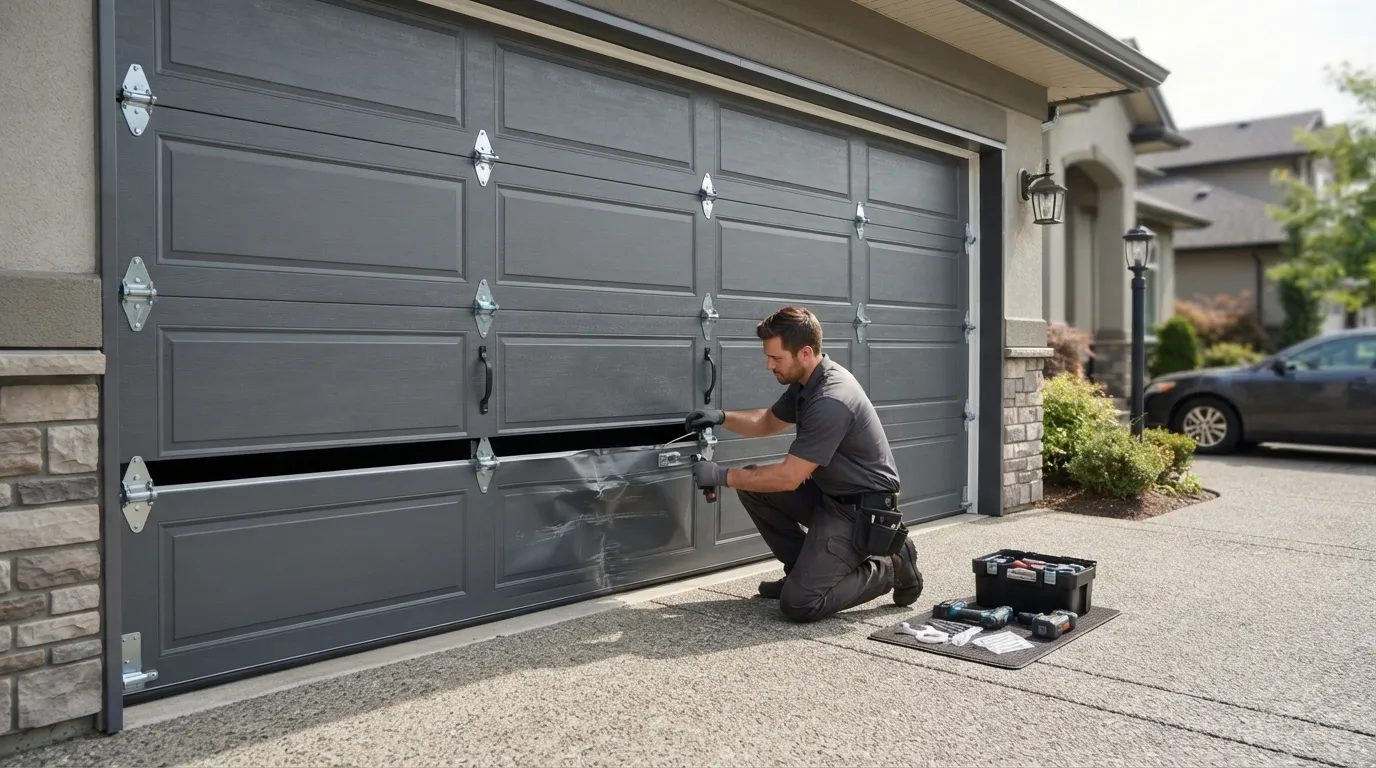
We're based in Jersey City, about 3 miles from Hoboken, and we run out to broken-spring calls on that side regularly. Call and tell us the door make if you know it, or just describe what's happening - a door that won't budge, a loud bang followed by the door going slack, or a door that opens fine but slams down on the way shut. Because Hoboken's housing stock is newer than a lot of what we cover (median year built here is 1975, versus 1958 across the wider service area), most jobs are straightforward torsion-spring swaps rather than the odd legacy hardware we sometimes run into on older blocks. We don't quote a fixed response window for Hoboken specifically since we're traveling in from Jersey City, but we'll give you a real estimate on the phone once we know the door type. Bring the door's brand or model number to the call if it's visible on the track or motor housing - it speeds up the parts question before we're even in the truck.
Job timing
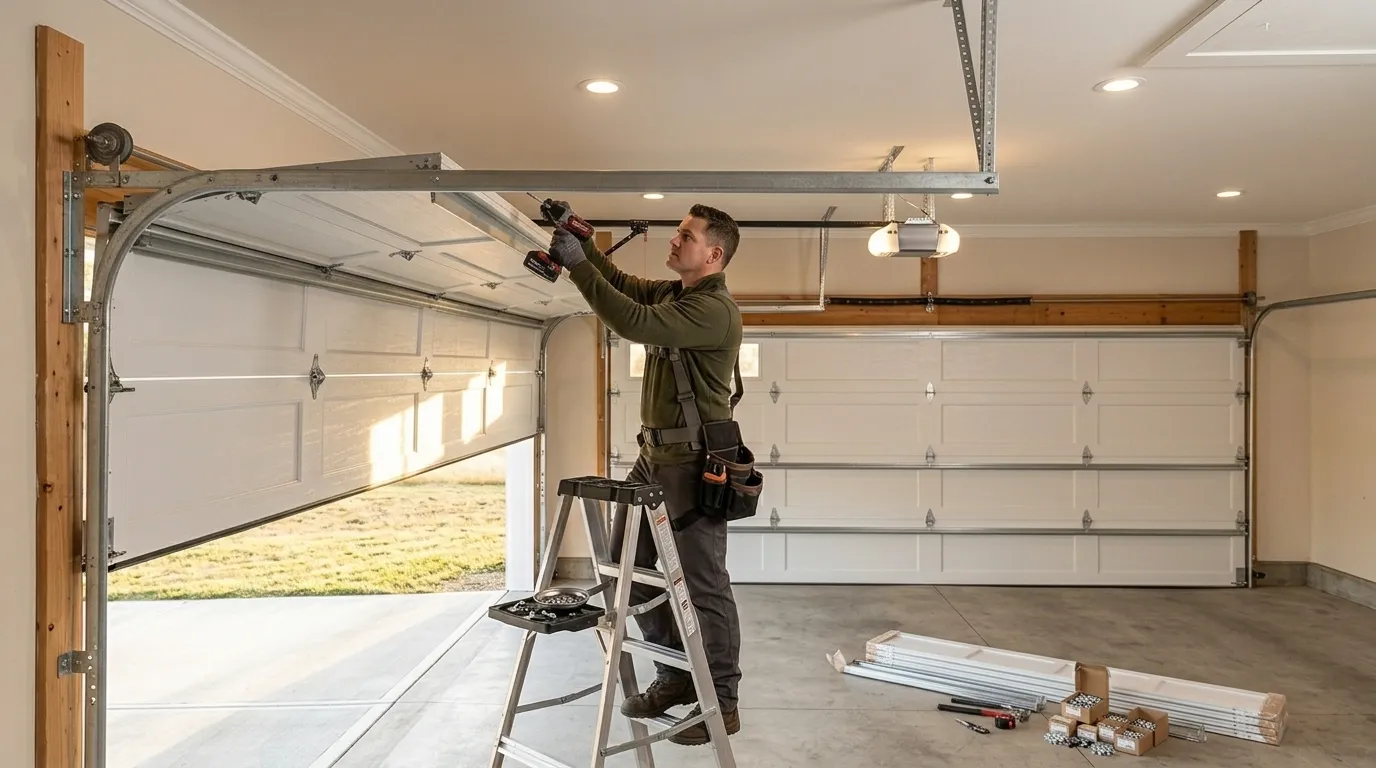
A standard torsion-spring replacement on a single door runs under two hours once we're on site, parts in hand. Double doors with two springs, or doors where the drums or cables have worn along with the spring, take longer. Because Hoboken homes mostly date to the 1960s through 1990s (median 1975), we're usually dealing with torsion springs mounted on a shaft above the door rather than the stretched side-mount extension springs you find on the pre-1960 stock that dominates older parts of the service area. Torsion jobs are more predictable to price and schedule because the hardware is more standardized across that build era. What adds time isn't the spring itself - it's a stripped or rusted drum, a bent shaft, or a track that's been knocked out of square, none of which you know about until the door's open. We'll tell you on site if we find something beyond the spring before we finish the job, not after.
DIY or pro
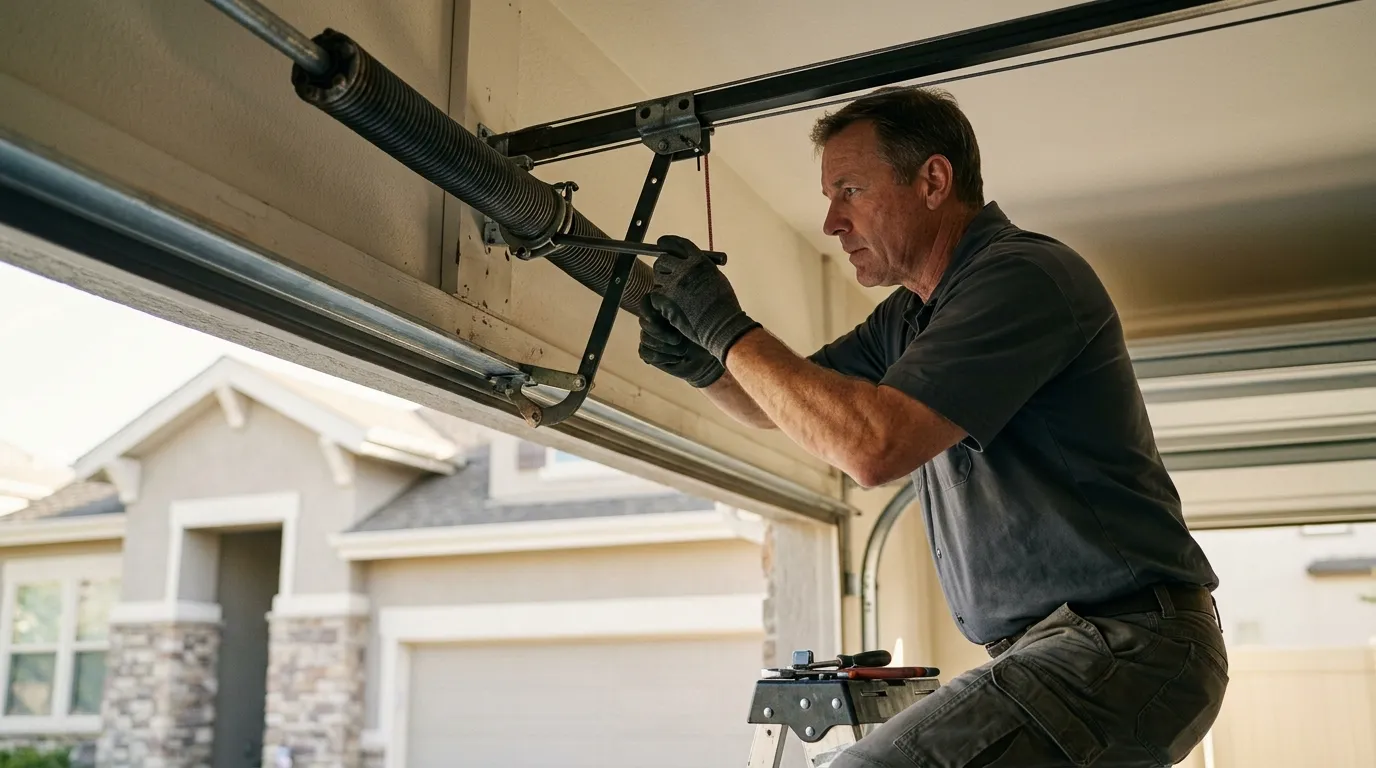
Don't. A torsion spring holds real tension - enough to break fingers, fracture a wrist, or worse if the bar slips while you're winding or unwinding it.
This isn't a caution we add for liability; it's the actual injury pattern for this repair, and it's why almost nobody in the trade will talk you through doing it solo.
If your door has two springs and one breaks, the other one is now doing all the work and can go next - that's a reason to call sooner, not a reason to wait and see.
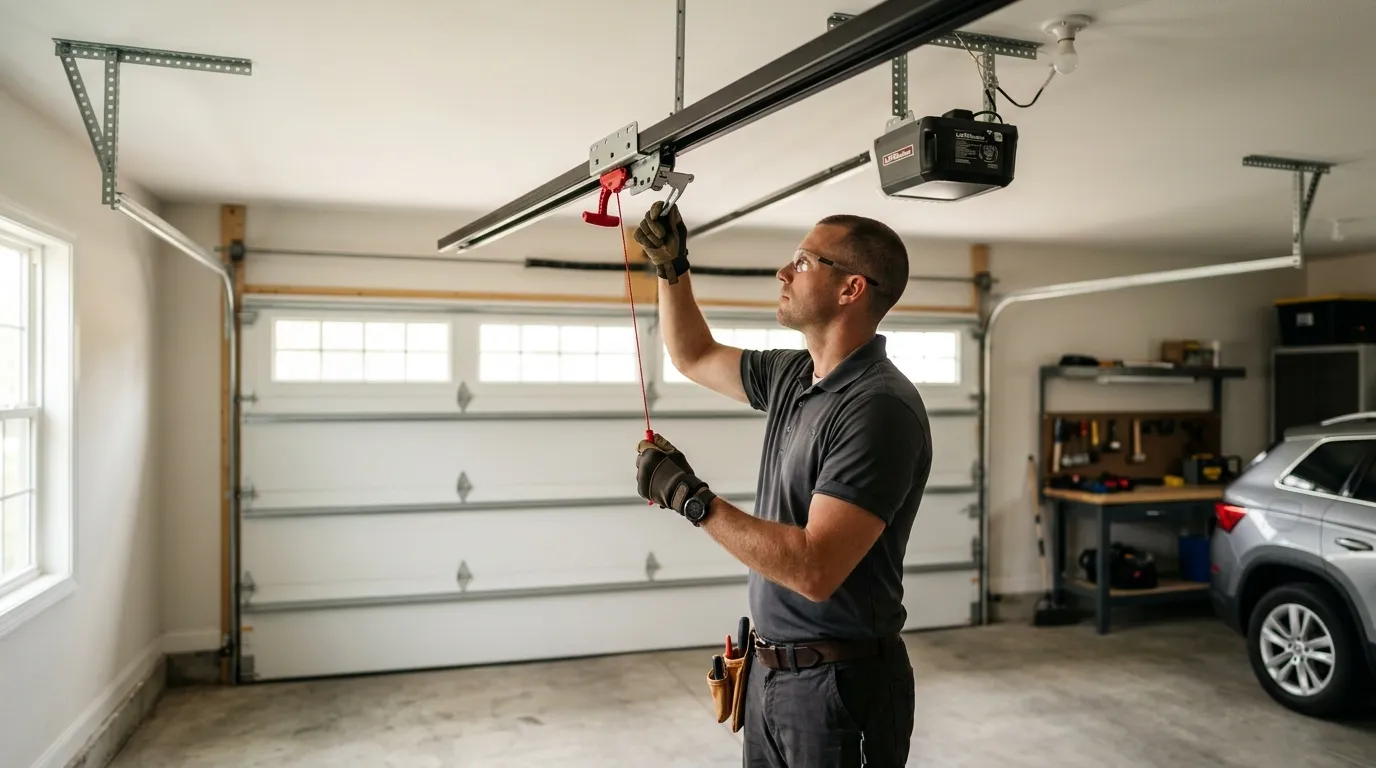
What you can safely do yourself: check whether the cables are frayed, note if the door is uneven when it's down, and unplug the opener before anyone touches the door by hand. Beyond that, this is a job for the right winding bars and a clamp, and for someone who's done it enough times not to guess.

Warning signs
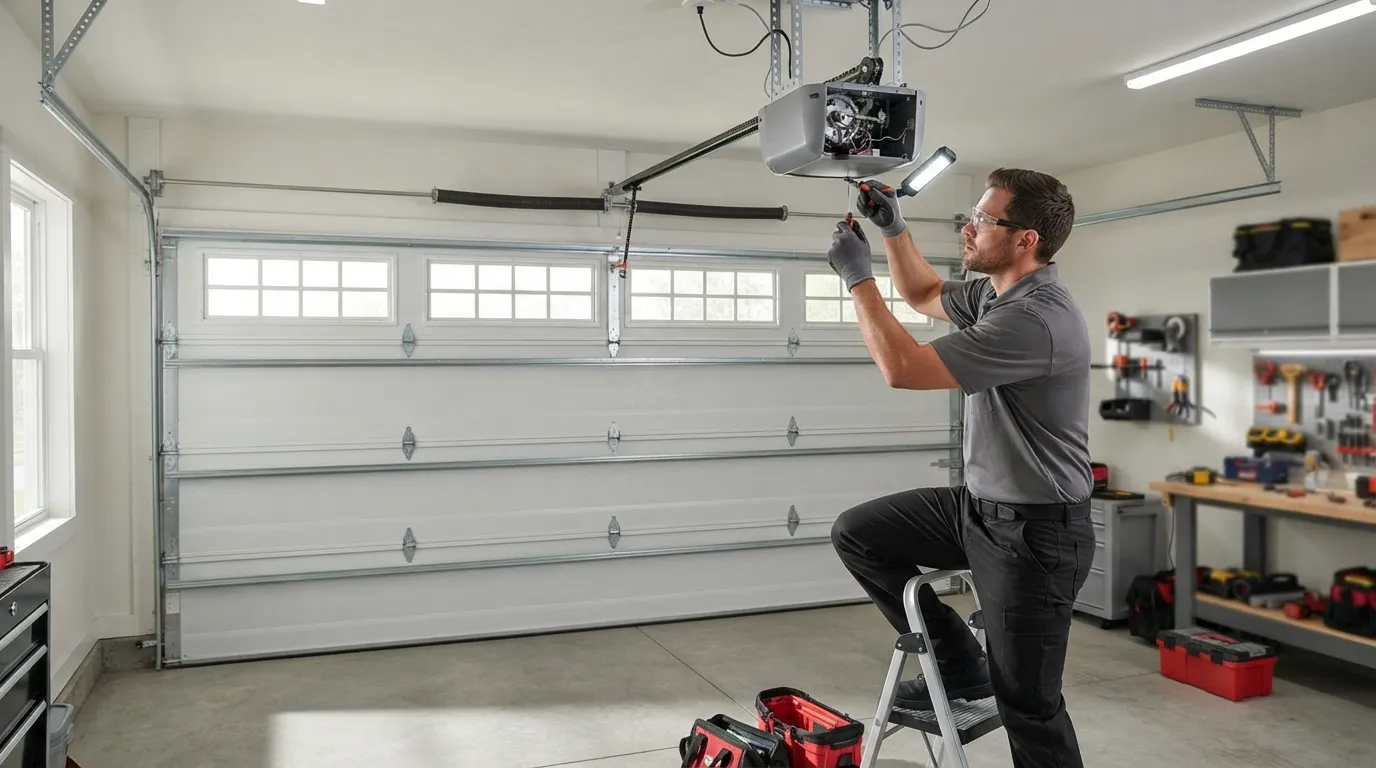
The classic sign is a loud bang from the garage, usually right before the door goes dead weight - it won't lift, or it drops fast when you try to close it manually. Sometimes it's quieter: the opener strains, groans, or trips its safety reversal because the spring can no longer help lift the door's weight. On the newer torsion doors typical of Hoboken's 1970s-era housing, you'll often see the spring itself, visibly separated, sitting on the shaft above the door rather than stretched along a side rail - that's the tell that distinguishes a torsion break from the extension-spring failures more common on older housing stock elsewhere in the service area. If the door is off its rails or the panel is bent, that's usually a separate issue from the spring, and worth mentioning when you call so we bring the right stock.
Local causes
Springs fail from cycle count and from cold, and Hoboken gets both. The service area sits in a cold, severe climate band, and steel loses flex in winter the same way any metal spring does - a spring near the end of its life is far more likely to snap on a 20-degree morning than in July. Hoboken's housing mostly dates from the 1960s through the 1990s (median 1975), which puts a lot of original torsion springs now well past the age where failure becomes routine rather than surprising - springs are rated in cycles, not years, and a door opened twice a day for three-plus decades adds up fast regardless of the weather. Household incomes here run higher than the service-area median ($176,943 versus $118,835), which we mention only because it tends to mean openers and doors get replaced or upgraded on a shorter cycle than the springs themselves - so we often find a newer opener paired with the original, tired spring.

Questions
Torsion jobs aren't inherently pricier, but pricing depends on shaft, drum, and cable condition, not just the spring. We give a real number after seeing the door, not before.
No - we run out of Jersey City, about 3 miles away, and travel to Hoboken for calls. We don't quote a fixed Hoboken response time separate from that.
Yes, on a double-spring door. When one goes, the other is carrying the full load and wears faster - we usually recommend replacing both at once rather than waiting for the second failure.
Steel gets less flexible in cold, and this area sits in a cold, severe climate band. A spring near the end of its cycle life is more likely to snap on a freezing morning than in warm weather.
Explore more
Ready when you are
Jersey City Garage Door Pros repairs and installs garage doors, springs and openers in Jersey City, NJ and the surrounding area.