
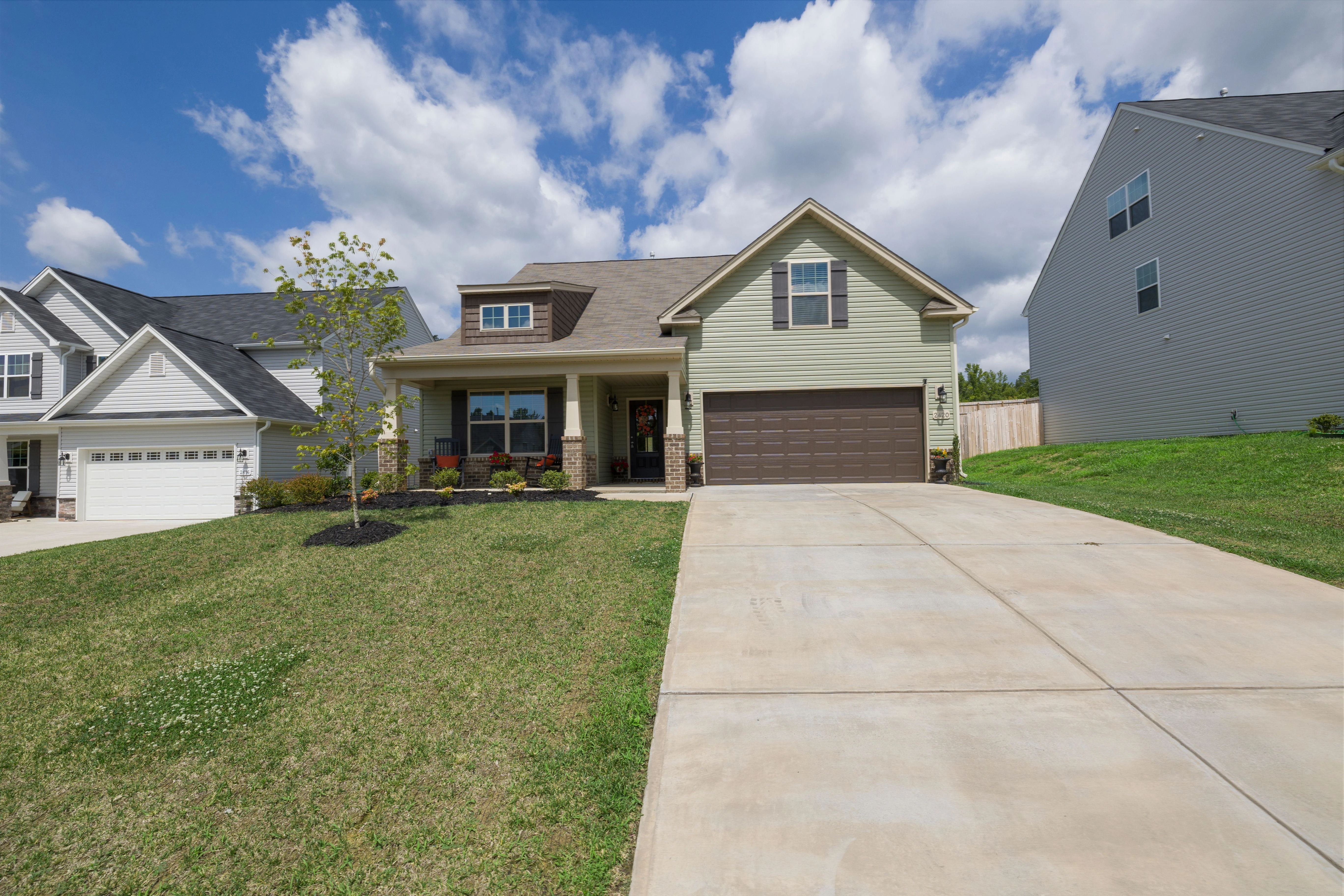
Cranford, Jersey City NJ
Garage Door Repair in Cranford, NJ
Garage door repair for Cranford, NJ, where most homes date to 1949. We drive out 13 miles from Jersey City to fix springs, openers, panels, and tracks.
Local detail
Common Jobs Here
The calls we get from Cranford skew toward hardware that's been in the same garage since the house was built. With a median build year of 1949 in this pocket, that's original torsion springs well past their wind cycles, steel tracks bent from decades of use, and openers that were bolted on as an aftermarket add-on sometime in the 70s or 80s rather than installed with the door. We replace a fair number of broken torsion springs on single-car openings here - older doors, older hardware, more fatigue. Panel swaps come up too, since sourcing a matching panel for a door this old sometimes means replacing the whole section instead of patching one.
We also see roller and cable jobs where the original galvanized rollers have worn grooves into the track. It's less common to get a call here for a modern belt-drive opener glitch than it is in newer construction - the housing stock just isn't there yet in this part of town. We travel out about 13 miles from our Jersey City base for these calls, so we plan the trip rather than treat it as a quick add-on to a nearby job.

The area
What Was Built Here
Cranford's homes in this service pocket center on 1949, roughly a decade ahead of the 1958 median across our wider coverage area. The broader territory runs from 1938 to 1996 construction, but this stretch sits firmly on the older end of that range. That decade matters for garage doors: houses from 1949 were built before overhead sectional doors were standard in every market, and a lot of them got retrofitted openers and replacement doors years after the fact rather than as part of the original build.
Roughly 968 households sit in this part of town, a small slice of the 294,747 owner-occupied houses across the full territory we cover. Median household income here runs around $82,222, well under the $118,835 median for the wider area - which we mention not as a judgment but because it tends to track with how long a homeowner rides out a repair before replacing the whole door. In a 1949-era neighborhood, that usually means more spring and cable work and fewer full door swaps than you'd see in newer construction.

What we find
Older vs Newer Streets
Not every block in Cranford dates to the same decade. The oldest sections, going back to that 1949 median, still carry the original garage openings - narrower, often single-car, built for the cars and doors of that era. Later infill construction, built anywhere up through the wider service area's 1996 tail end, brought wider two-car openings and lighter door panels designed for standard extension or torsion setups that are easier to source parts for today.
That split shows up in our service calls: the 1949-era streets need more custom spring sizing and occasional panel fabrication work, while the newer infill houses have doors closer to what a hardware supplier stocks off the shelf. If your house is on one of the older blocks, expect a repair to take a bit more diagnosis before we quote it, since the hardware isn't always a standard size.
How we work
What That Means for Doors
Two things drive what we see in Cranford: the age of the housing and the cold-severe climate band this whole territory sits in. On a 1949 door, insulation is usually an afterthought - a lot of these are single-layer steel or old wood doors with no thermal break, which matters more here than in a milder climate because winter temperature swings work springs and seals harder. We'll often recommend a weatherstrip and bottom seal replacement alongside a spring job on these older doors, since it's a small add to a service call that's already happening.
One honest limitation: if a door this old needs a replacement panel and the original manufacturer doesn't make that profile anymore, we're looking at a full door replacement rather than a patch, and that's a bigger job and a bigger invoice than a homeowner sometimes expects walking in. We'll tell you that up front rather than after we've started.

Service areas
Other areas we cover near Cranford

Questions
Common questions
Do you have a shop or truck based in Cranford?
No. We run out of Jersey City and drive out to Cranford for calls, about 13 miles each way. We don't keep a local depot here, so we schedule the trip rather than treat it as a drop-in stop between other jobs.
Why do repairs on my 1949 house cost more than newer doors?
Older openings here often use non-standard sizes or spring configurations that a modern parts supplier doesn't stock off the shelf. That means more diagnosis time and sometimes a custom-cut spring or a fabricated panel, which runs higher than a stock swap on a newer door.
Is it worth repairing an old door instead of replacing it?
Often yes, if the frame and track are sound and the issue is a spring, cable, or roller. If the panel itself is damaged and the manufacturer no longer makes that profile, replacement usually makes more sense than trying to patch it.
Ready when you are
Need a garage door sorted in Jersey City?
Jersey City Garage Door Pros repairs and installs garage doors, springs and openers in Jersey City, NJ and the surrounding area.